

Contributions
Domain over Onboarding, Homepage, AI Price Comparison, Cart Substitution, and Checkout.
Design lead for High-Fidelity Prototype and Flows
Co-research and testing
Date
Winter 2026
Tools
BudgetCart
Collaborators
1 UX Researcher and 2 UX Designers
01 — Problem, Research, and Findings
For SNAP-eligible households, grocery shopping is a high-stakes battle where 'survival math' and the fear of a declined card force difficult nutritional compromises.
BudgetCart eliminates this burden by automating price tracking and eligibility rules, restoring dignity and confidence when grocery shopping.
BudgetCart eliminates the "survival math" of high-stakes shopping with AI-driven financial guardrails.
By combining real-time tracking and cross-store comparisons, it maximizes purchasing power and restores user agency at checkout.

The journey of designing BudgetCart began not with wireframes, but by listening to the very real, often hidden anxieties of everyday shoppers. During user interviews, a stark reality emerged: every single participant was relying on stressful mental calculations just to survive a trip to the grocery store.
Shoppers were exhausted by a fragmented web of store apps, handwritten lists, and physical flyers, a chaotic system utilized by eighty-three percent of users because no single platform integrated their personal budgets with essential SNAP or WIC benefits.
The core conflict was a painful paradox where seventy percent of users desperately prioritized the lowest price, yet twenty percent were trapped by the physical cost of gas and distance. They felt completely overwhelmed by the transit, planning, and mental energy required to hunt down affordable, diet-safe options across multiple distinct locations.


Define
02 — Information Architecture
To bring order to this chaos, BudgetCart had to serve as a calming, centralized foundation. The resulting sitemap was deliberately structured to reflect clarity, organized into six distinct navigational pillars. This structural blueprint paved the way for three deeply intentional user flows designed to restore the shopper’s agency.
The experience begins with the Entry & Personalization Flow, which acts as an immediate protective guardrail. Instead of dropping users into a generic marketplace, the system guides new users to set accessibility preferences and directly link their EBT, SNAP, or WIC accounts before ever reaching the home dashboard.
Next, the AI Assistant Flow actively lifts the burden of manual planning. Shoppers can simply type a request, snap a picture with their camera, or upload a photo of a handwritten list. The system then invisibly analyzes live inventory and prices to generate an optimal store comparison.
Finally, the Comparison and Substitution Flow neutralizes the physical distance paradox. Users are empowered to select a specific store, seamlessly substitute items that stretch their budget within the cart, and glide directly into checkout, payment, and order tracking.


02 — Sketches, Low fidelity, and High fidelity Iterations
Based on user research and usability testing, I iterated from initial sketches to a high-fidelity prototype to prioritize proactive financial management and reduce cognitive load.
I replaced generic e-commerce grids with a personalized budget dashboard, and consolidated complex item-by-item price comparisons into intuitive, store-level selection cards to prevent decision paralysis based on information gathered during user onboarding.
To build trust and lower the barrier to entry, I also transformed the open-ended AI chat by integrating structured prompts and multimodal list scanning, seamlessly guiding users toward their optimal savings.
To bridge the gap between structural wireframes and the final product, I developed a visual identity that balances the approachability of a local market with the steadfast security of a financial tool.
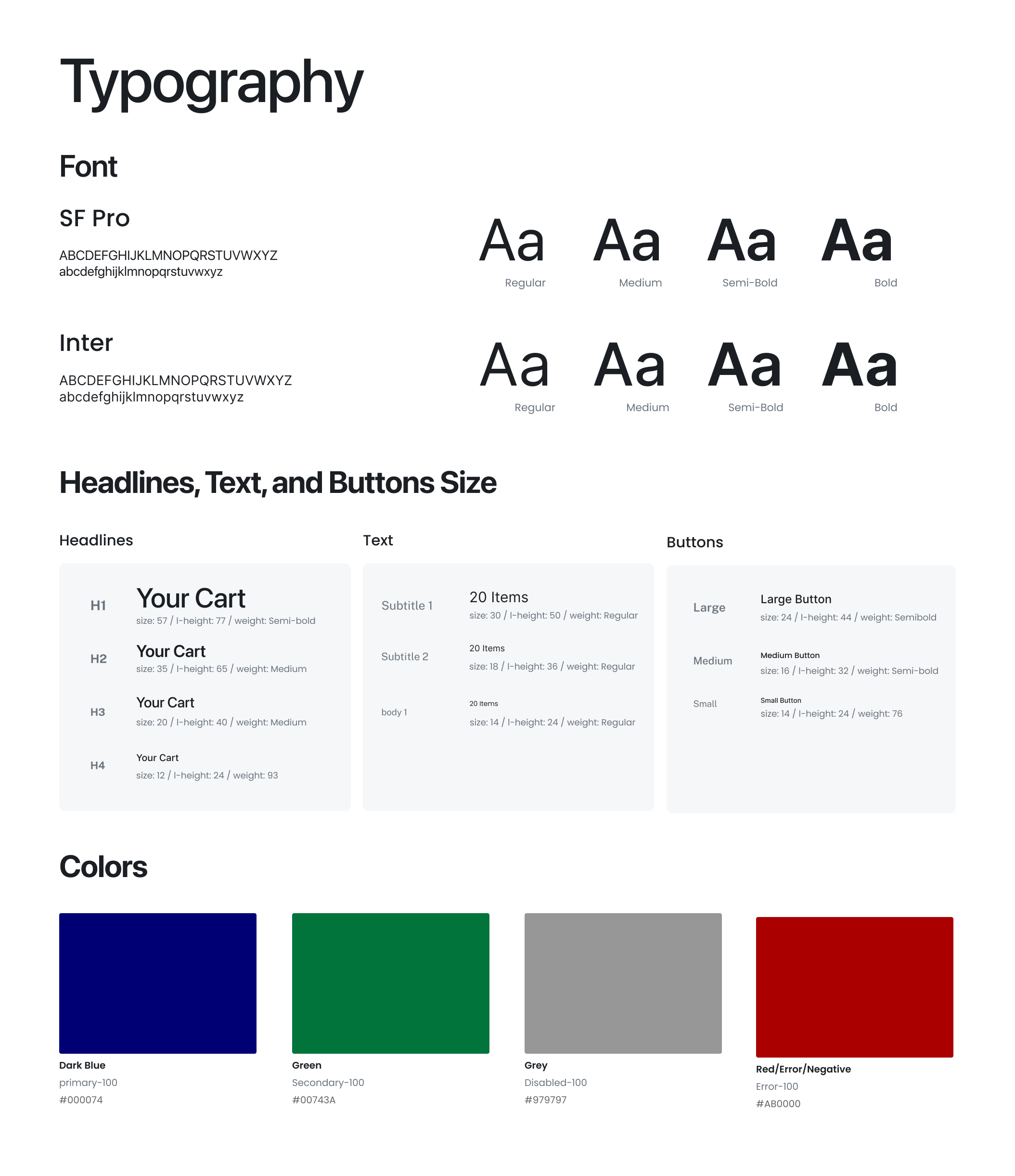
03 — Usability Testing Results and Iterations
Key Decision 1: The "Distance Paradox" (Gas vs. Price).
Data: Users were losing money on gas by driving to distant "discount" stores to save a few dollars.
Strategy: I designed a Multi-Store Comparison engine that calculates the True Cost (Cart Total + Delivery). By integrating delivery options, we rendered distance irrelevant, allowing users to choose based on Final Price, not mileage.
Result: Reduced decision paralysis, resulting in 87% faster task completion.
Solving: Cognitive Overload (Mental Math)
Data: 100% of users rely on manual mental math.
Strategy: "Instead of forcing users to use a calculator, I introduced generative budgeting: The AI Assistant ingests the user's grocery list and instantly generates a cart that fits their strict budget and specific needs, removing the cognitive load of 'math' entirely."
Result: Achieved 90% Budget Clarity, with users reporting they felt "100% confident" they wouldn't face a decline at checkout.
Solving: Eligibility Uncertainty & Checkout Stigma
Data: Users expressed deep anxiety about "breaking their budget".
Strategy: While standard apps use substitutions to increase price for profit, I designed this flow to protect the user.
The system detects items that would trigger a payment decline (non-WIC/SNAP eligible or over-budget) before the user reaches the register. It creates a private intervention, offering pre-validated, compliant alternatives to protect the user's budget.
Result: 4.8/5 user confidence rating, effectively ensuring users approach checkout with 100% certainty.
04 — High-Fidelity Prototype
05 — Key Takeaways

Creating BudgetCart taught me how to bridge human dignity, civic policy, and ethical AI to serve real community needs.
By treating dignity as a core usability requirement, I learned to translate complex SNAP/WIC regulations into intuitive, low-cognitive-load systems for users navigating high-stress environments.
Furthermore, through continuous collaboration and intentional AI integration, my team and I transformed potential friction into a supportive, technically feasible tool that builds user confidence.